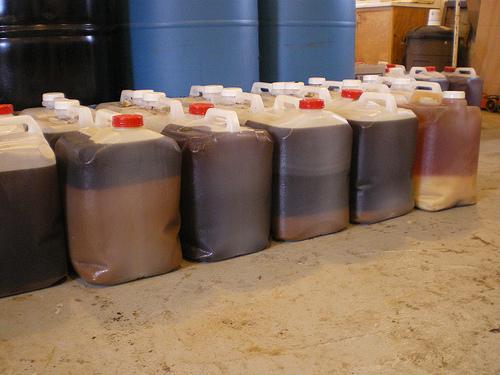
Sesame oil has a large amount of oil, and has a good effect of moistening intestines and relieving constipation. It has a certain preventive effect and curative effect on constipation. People who suffer from constipation can moisten their intestines and relieve constipation by drinking a mouthful of fragrant oil on an empty stomach in the morning and evening.

- Apr 24 Wed 2019 18:12
-
Four main effects of sesame oil
1.Relieve constipation
Sesame oil has a large amount of oil, and has a good effect of moistening intestines and relieving constipation. It has a certain preventive effect and curative effect on constipation. People who suffer from constipation can moisten their intestines and relieve constipation by drinking a mouthful of fragrant oil on an empty stomach in the morning and evening.


- Apr 24 Wed 2019 17:56
-
Sesame Seed Oil Processing
Sesame oil is a kind of edible oil derived from sesame seeds. It is mainly used as a flavor enhancer in China, Korea, Japan, Middle East and Southeast Asia for cuisine, and also cooking oil in South India. Sesame seed contains 54% of oil, while the oil extraction rate is 45-50%. Sesame oil has excellent quality, rich nutrition, and pure flavor. It contains high linoleic acid, which is goot to soften blood vessels and prevent diseases caused by angiosclerosis. At the same time, sesame oil contains antioxidants like sesamol, semamolin, etc. that make sesame oil durable to store and hard to deteriorate.
sesame oil
sesame oil
- Apr 24 Wed 2019 17:49
-
The Correct Use Of Screw Press
Spiral oil press in operation, processing only to master a certain skill, to improve the rate of oil.
Oil engine room temperature should be kept at 15 ℃, 20 ℃, the temperature is too low will affect the yield efficiency and oil.Oil into the appropriate to squeeze the moisture content of the former, the best moisture content is as follows: peanut 8% – 8%, soybeans 5% 8%, cotton seed 4% – 4%, rapeseed by 6% to 8%.
- Apr 24 Wed 2019 17:09
-
Energy Life Cycle Analysis of Biodiesel
Energy life cycle analysis (EgLCA), also popularly known as “energy balance,” accounts for the amount and type of energy used in the production of a fuel and compares that to the amount of energy contained in the resulting fuel.
We prefer the term “energy life cycle analysis” over “energy balance” because the term “energy balance” could mislead people into thinking that the input and output energy should be balanced, or equal. Because EgLCA is usually concerned with the input of fossil fuel energy versus the energy in the fuel itself, usually the input of solar energy (captured during photosynthesis) is not accounted for.
- Apr 24 Wed 2019 17:03
-
Algae for Biofuel Production

Research is examining microalgae, 20 to 80 percent oil by dry weight biomass, as a biofuel energy crop. Learn about algae production in ponds and photobioreactors, yields, costs and challenges to this exciting new feedstock for biodiesel production.
Introduction Contents
- Apr 24 Wed 2019 16:43
-
Transportation and Storage of Biodiesel

Introduction
Biodiesel that leaves the production plant in good condition can become unacceptable during distribution without proper care and attention. Biodiesel can degrade due to oxidation, contact with water, and/or microbial activity.
- Apr 24 Wed 2019 16:01
-
Pressing, cold pressing and leaching of edible oil
- Apr 24 Wed 2019 16:01
-
Physicochemical indexes and determination methods of biodiesel
Biodiesel mainly consists of three elements, C, H and 0. As an alternative fuel of diesel, biodiesel should meet the use requirements of diesel to ensure its use as a fuel. Therefore, the evaluation of whether biodiesel can be used as a substitute fuel for diesel oil should first depend on whether it has similar properties to mineral diesel oil, mainly in the following aspects: 1.
1.Good combustion performance – sixteen alkane value;
- Apr 23 Tue 2019 17:58
-
What is the manufacturing process of cottonseed oil?
Cottonseed oil extraction involves a series of oil manufacturing process and professional oil processing machinery. Whatever your cottonseed oil mill plant is small or large, the basic manufacturing process is needed to produce high quality cottonseed oil. The detailed cottonseed oil manufacturing processes is as follows.
Cleaning: Getting rid of organic impurity (stems and leaves, hull, rope, etc.), inorganic impurity (dust, silt, pebbles and metals), oiliness impurity(grain of insects, grain of faultiness, heterogeneity seeds, etc.) is very important for cottonseed oil extraction since it can improve the oil yield, protect the oil processing equipment. The machine for cottonseed cleaning is magnetic separator, cleaning sieve, destoner, hammering decorticator and more.
- Apr 23 Tue 2019 17:40
-
Biodiesel Fuel Quality
- Apr 23 Tue 2019 17:25
-
Biodiesel Cloud Point and Cold Weather Issues
In the northern parts of the United States and other cold regions of the world, one of the major concerns among biodiesel users is its unfavorable cold flow properties. In cold climates, it can be a challenge to fuel vehicles with high blends of biodiesel because biodiesel tends to gel (freeze) at higher temperatures than does conventional diesel. The actual temperature at which biodiesel freezes depends on the type of oil or fat from which it is made. A diesel fuel’s cold-weather characteristics are measured by the cloud point (CP), the cold filter plugging point (CFPP), and the pour point (PP). The cloud point is the temperature of the fuel at which small, solid crystals can be observed as the fuel cools. The cold filter plugging point is the temperature at which a fuel filter plugs due to fuel components that have crystallized or gelled. The pour point refers to the lowest temperature at which there is movement of the fuel when the container is tipped. Compared to petro-diesel, biodiesel tends to have a much narrower range of temperatures between the cloud point and the pour point. Those who are used to dealing with petro-diesel may be surprised at this narrow range. While there may be a 20-degree difference between the cloud point and the pour point of petroleum diesel, biodiesel may have a difference of only a few degrees.
Testing for Cloud Point and Pour Point
- Apr 23 Tue 2019 16:51
-
Used and Waste Oil and Grease for Biodiesel

Some of the most environmentally friendly biodiesel feedstocks are used cooking oil and waste grease. According to the EPA’s Renewable Fuel Standards Program Regulatory Impact Analysis, released in February 2010, biodiesel produced from waste grease results in an 86% reduction in greenhouse gases, compared to petro-diesel.
There are two general categories of waste oil and grease. The cleanest and easiest to work with is used cooking oil, also called waste vegetable oil or used fryer oil. This is edible oil that has been used multiple times in a deep-fat fryer. The second type is called “trap grease.” Restaurants are required to install grease traps in their drains to prevent fats and oils that go down the drain from entering sewer pipes. The grease in these traps can be collected to make biodiesel.